

Garage floor coating services in South Florida
SFL Epoxy is a guide run by Terragroupe, LLC. We do not install anything and we are not booking jobs yet.
This site covers epoxy, polyaspartic and flake garage floors in South Florida. The systems differ in how fast they cure, how much humidity they allow and how they are priced. Read a service page for the process and the limits, or take the Garage Floor Readiness Score to see what your slab needs first.
SFL Epoxy is a guide run by Terragroupe, LLC. We do not install anything and we are not booking jobs yet.
Last reviewed October 18, 2026.
Updated
Services in South Florida
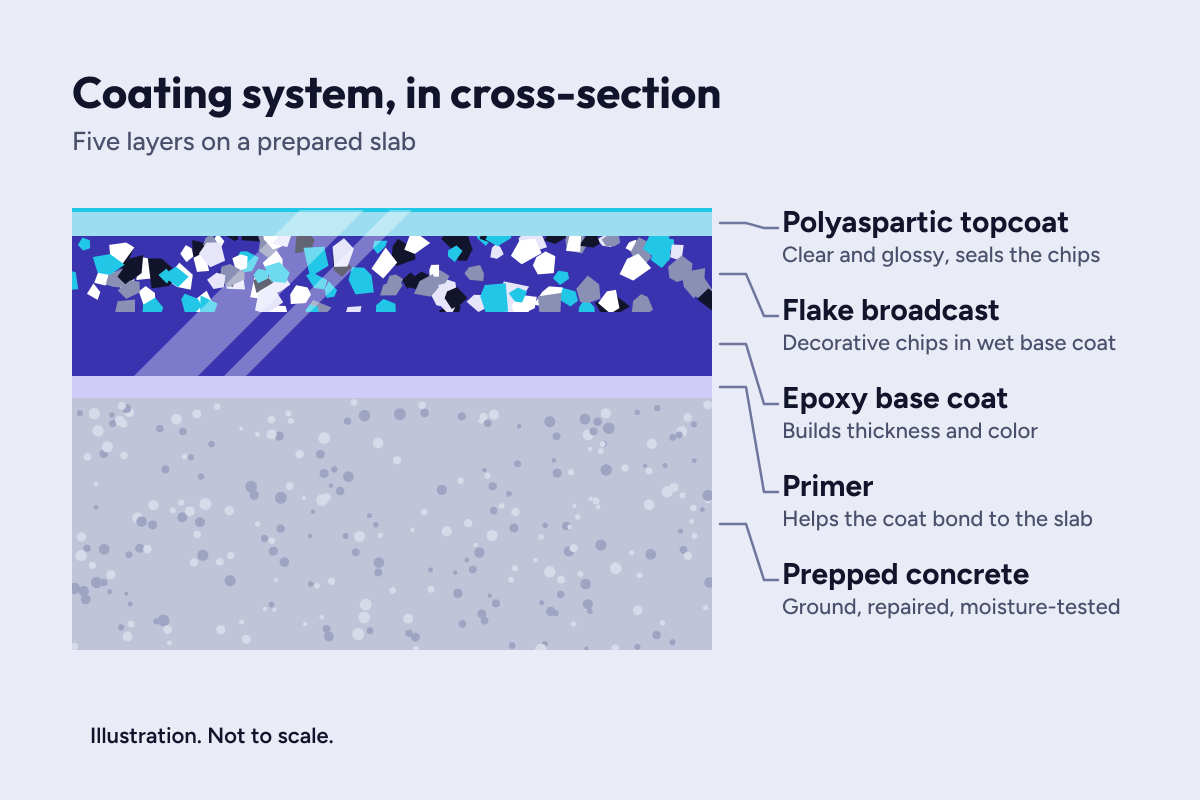
Illustration Epoxy garage floor
A resin and hardener coat that bonds to a ground, tested slab. It is also the base layer in many flake and hybrid systems.
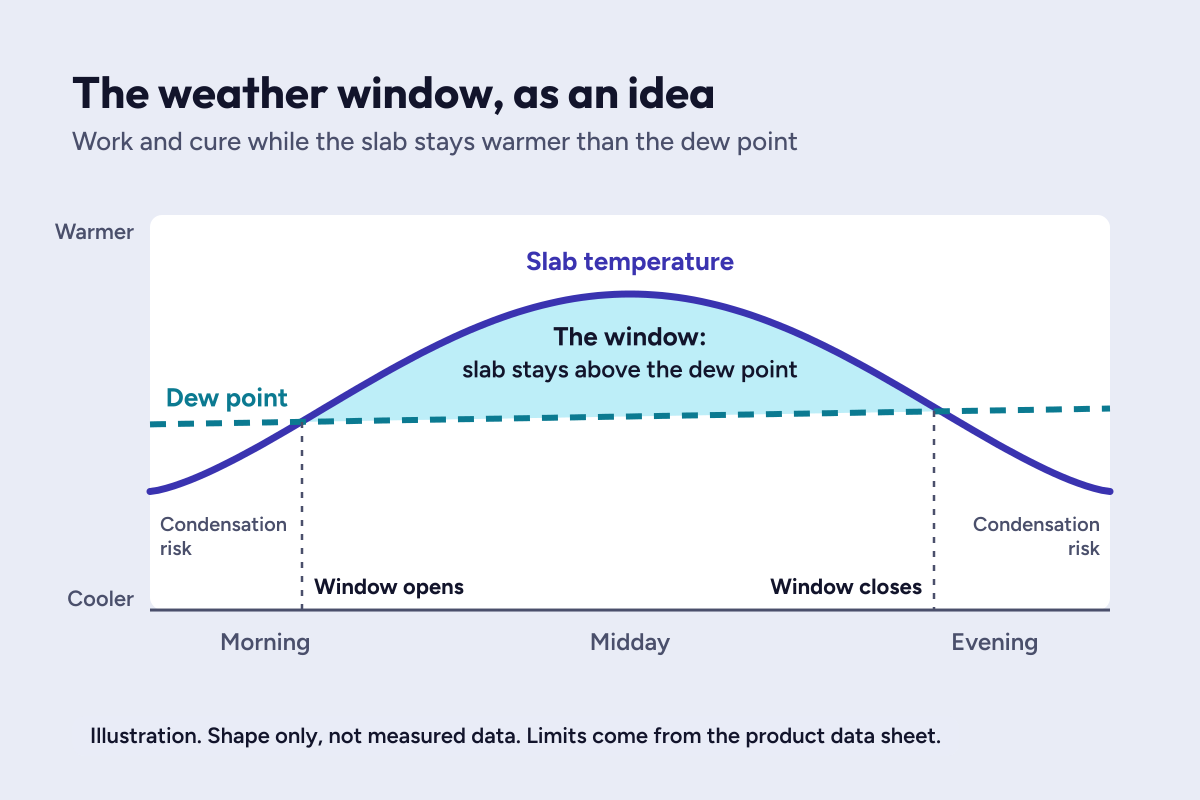
Illustration Polyaspartic garage floor
A fast-curing coat, often used as a clear topcoat. It brings a tighter humidity cap and a short recoat window.
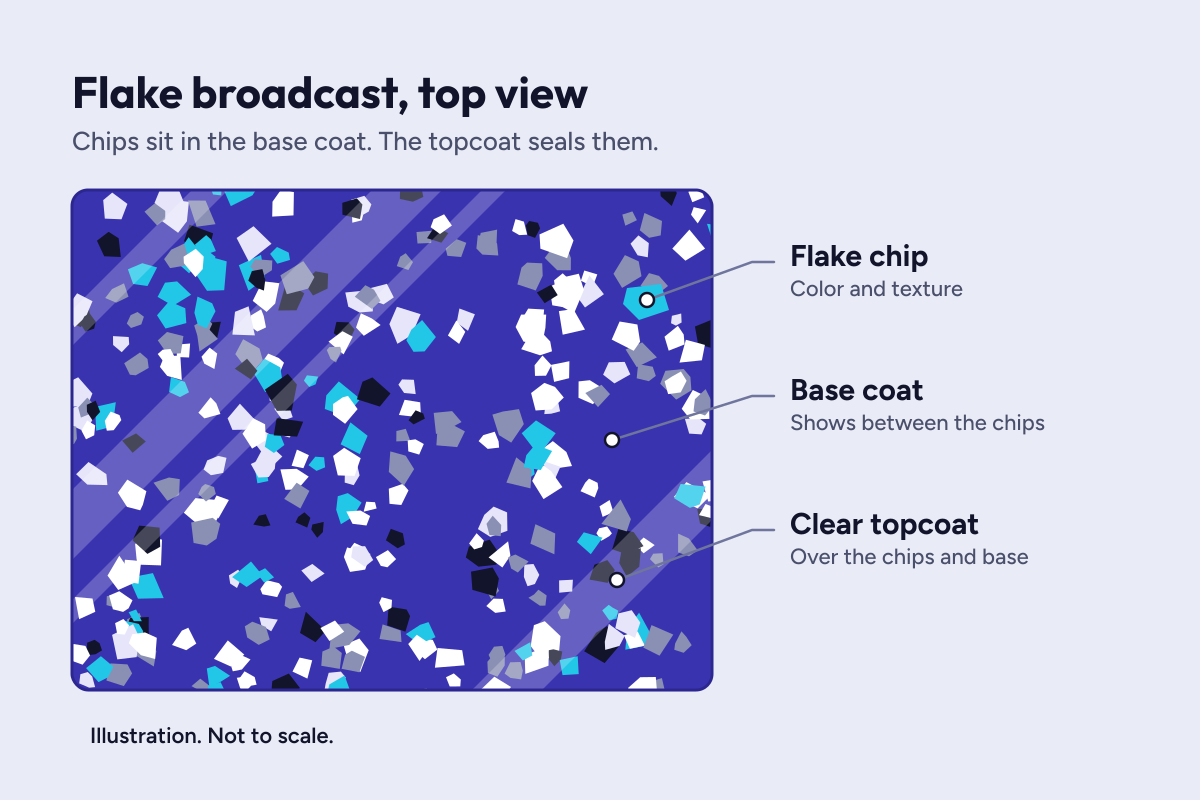
Illustration Flake garage floor
A base coat with colored flakes locked under a clear topcoat. It adds texture and a pattern, and a few more steps.
How it works
The steps run from a first question to a finished floor. Nothing starts until you say yes.
- Check your floor. Take the Garage Floor Readiness Score. A short set of questions shows what to sort out first.
- Photograph your floor. Take photos of cracks, stains, old coating, drainage and garage size. They show what to fix first and what to ask an installer about.
- Ask for a written scope and a price. The scope should name the prep method, the moisture test, the system and the wait before cars go back in. The price should come in writing before any work.
- Pick a window and check the result. Choose a start day that fits the maker's weather limits. Ask for photos of the prep and of the finished floor.
Cities we cover in South Florida
How the systems compare
- Epoxy garage floor: a resin and hardener coat. The sheet we read sets a looser humidity cap than the polyaspartic sheet.
- Polyaspartic garage floor: a fast-curing coat, often a clear topcoat in a hybrid. It returns to service sooner and has a tighter humidity cap.
- Flake garage floor: a base coat, colored flakes and a clear topcoat. It stacks the weather limits of every layer.
How to choose
Start with the slab and not the system. Moisture, surface prep and the weather on the day decide whether any coat bonds. The guide on why coatings peel shows the sources. A fancy system on a wet slab still fails.
Then ask yourself these questions.
- How soon do you need the garage back? Polyaspartic returns to service sooner.
- What look do you want? Flakes add a pattern and some texture.
- How tight is your weather window? A tighter humidity cap and more layers leave less room.
- How much do you want to spend? National ranges for epoxy and polyaspartic overlap, and each service page shows the method. The Garage Floor Price Estimator turns them into a range for your garage size.
What is the same in every system
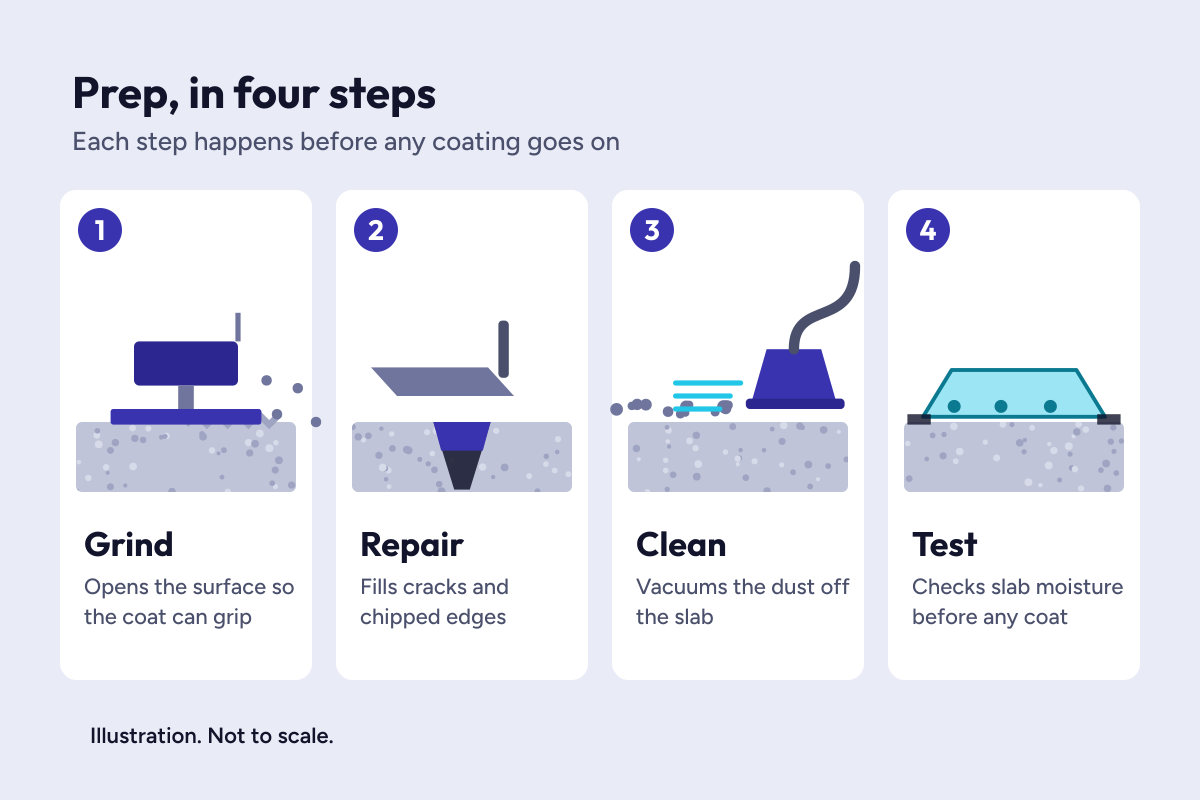
Every system needs a clean, rough, dry slab. Cracks get filled and the slab gets a moisture reading before any coat goes on. The prep guide lists the steps.
Every system needs a written scope and a warranty with its exclusions. The cost guide shows national price ranges and what moves them.
A written scope should name the system, the product data sheets, the weather cut-offs and the wait before cars. Ask every installer for the same list so quotes can be compared.
Guides
Questions people ask
Which garage floor system fits a Florida garage?
We found no independent test that ranks the systems for Florida. The sheets differ on humidity caps and cure times, so the right pick depends on your slab, your weather window and how soon you need the garage back. The readiness score is a good first step.
Where do the numbers on the service pages come from?
Every number carries a source and a date, or it is marked as our arithmetic. Weather limits come from manufacturer data sheets and are labeled as vendor data. Prices are national ranges, not South Florida quotes. Each service page lists its sources at the bottom.